
AI Website Builders: How to Use Them Without Losing What Makes Your Brand Different
Executive summary
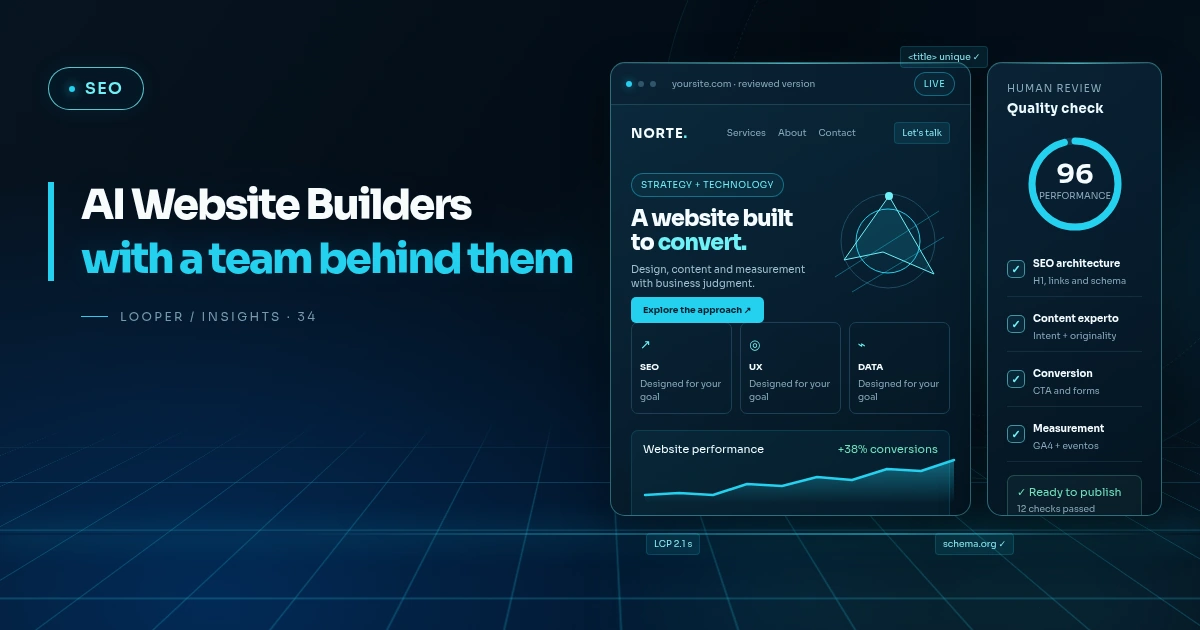
AI website builders have pushed the cost and time of launching a site close to zero, and that is good news for any business. The risk appears when the tool replaces decisions instead of speeding them up: sites that look polished but resemble thousands of others, generic copy, a structure that does not rank and automated scores that create a false sense of quality. We use these tools too. The difference is the team behind them: strategy before the build, a distinct brand identity, reviewed technical SEO and copy that is specific to the business.
A website in minutes: what changed
Not long ago, a professional website took weeks or months. Today, you can describe your business in a sentence and have a site live the same afternoon. The market is crowded with offers, prices keep dropping and the pitch is consistent: a business-ready website, visible on Google and in AI search, no technical skills required.
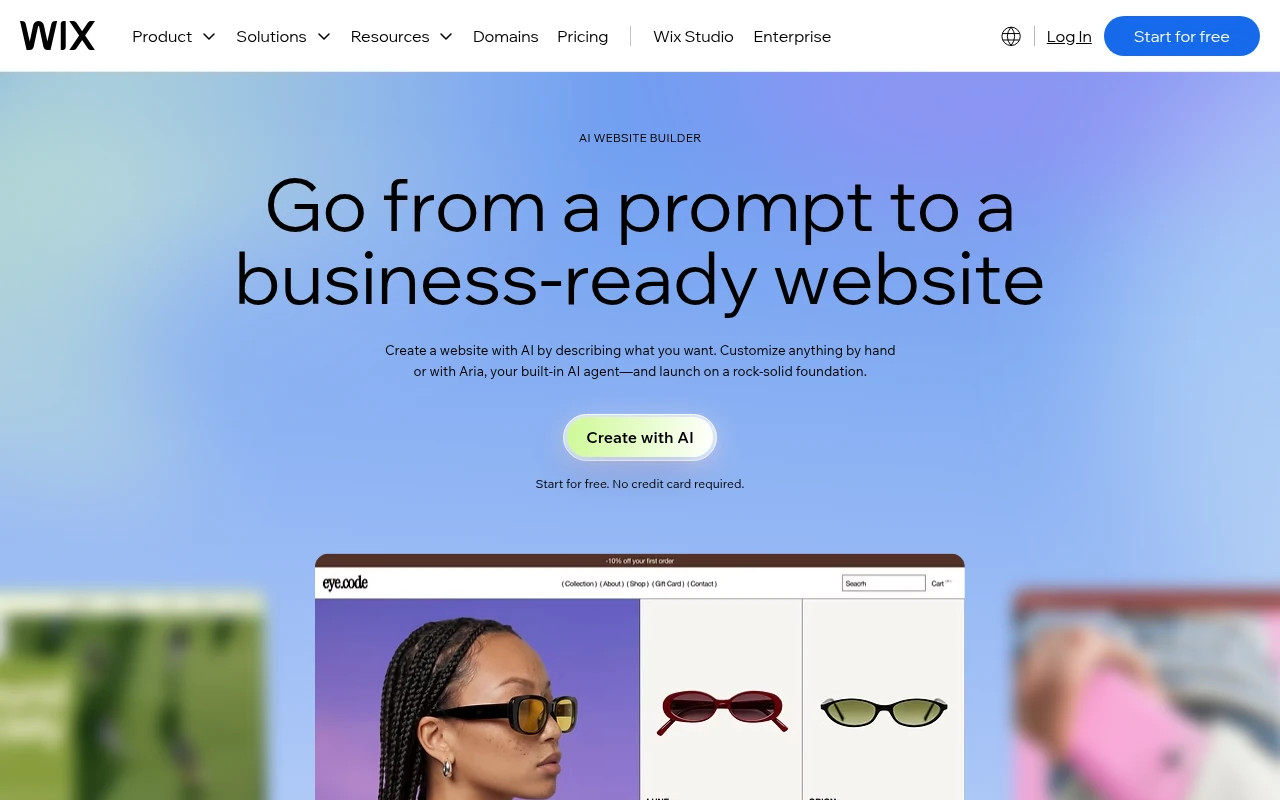
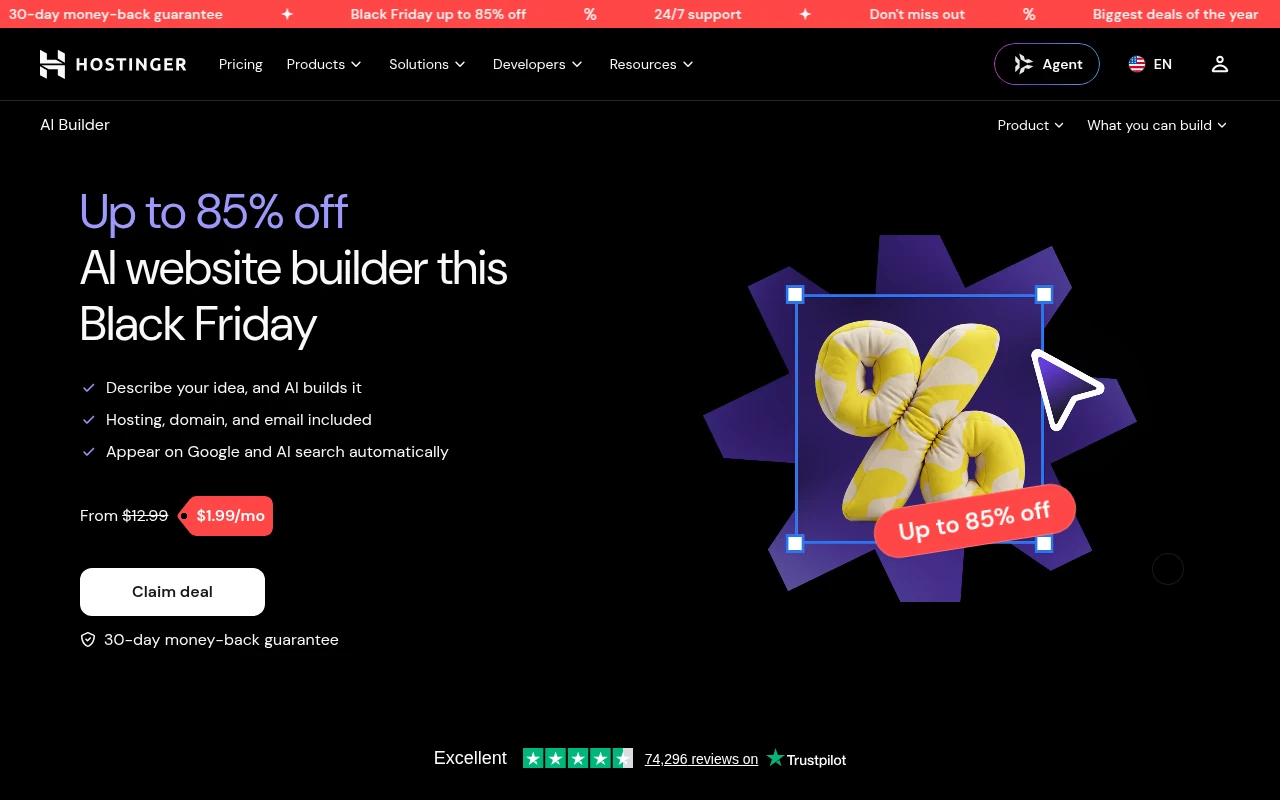
For many U.S. small and mid-sized businesses, that pitch is hard to ignore. And the tools largely deliver on what they promise: a functional, good-looking site in record time. What the promise leaves out is that a working website and a website that works for your business are two different things, and the tool does not close that gap on its own.
What the tool will not decide for you
1. Your identity
Builders generate from patterns that perform on average: proven layouts, safe palettes, neutral type and stock imagery. The result is clean and interchangeable. When a buyer compares three vendors and all three sites look alike, differentiation has to come from somewhere else. Brand identity is a decision, not a default setting.
2. A structure that ranks
A 2026 analysis of 93 live sites built with AI and no-code builders found a revealing gap. The average Lighthouse SEO score was 96 out of 100, yet 66% of the sites had no H1 heading, 75% had no structured data, 44% were missing a canonical tag and the median mobile load time for main content was 6.6 seconds. The author runs a custom web studio, so it is fair to read the findings with that in mind, but every issue it flags can be verified on any site.
The takeaway is not that the tools are bad. It is that an automated score checks the basics, while what actually drives rankings—structure, real-world speed, specific content and clear signals for search and AI engines—requires decisions someone has to make and review.
3. Copy that sells
AI-generated website copy tends to be correct and empty: “tailored solutions,” “committed to excellence,” “exceptional service.” To a search engine, an AI assistant or a buyer, those phrases say nothing. What ranks and converts is the specific: what you do, for whom, where, how you are different and what proves it.
4. What happens after launch
A website is not finished when it goes live. It has to be measured, improved, connected to your ad campaigns and CRM, and eventually migrated. Some platforms keep your site locked into their ecosystem. Better to know that before you build than after you have rankings to protect.
Default-generated site vs. AI-built with a team behind it
| Area | Generated and published as-is | Built with AI and an expert team |
|---|---|---|
| Identity | Suggested template and palette | Your brand identity applied on top of the tool |
| Structure | Whatever the tool proposes | Designed around search demand and page goals |
| Technical SEO | High automated score | Headings, speed, schema and canonicals reviewed |
| Copy | Generic and correct | Specific to the business, with proof points |
| AI visibility | Left to chance | Content prepared to be understood and cited |
| Measurement | Basic or missing | Connected to campaigns, conversions and CRM |
| Evolution | Launched and forgotten | Measured, improved and scaled with the business |
How to use AI builders with judgment
We use AI building tools ourselves, including on our own website. What changes the outcome is the order and the judgment applied:
Strategy first: who the site is for, what each page must achieve and how your customers search.
A defined identity: colors, typography, tone and image style decided before generating, not accepted afterward.
A fast build with the tool, on top of that foundation.
A technical review: headings, mobile speed, titles, meta descriptions, structured data and indexing.
Specific copy written or edited by people who know the business.
Ongoing measurement and improvement, connected to the rest of your marketing.
Common mistakes
Trusting the automated score. A 96 SEO score does not mean the site will rank.
Publishing the suggested copy. It is a draft, not a brand message.
Keeping the default template. It saves hours and costs you differentiation.
Skipping a mobile speed check. Most of your visitors are on mobile, and that is where they leave.
Ignoring the exit plan. Measurement, growth and portability should be settled before the build.
Where to start if you already have an AI-built site
Open your site on a phone over cellular data and time how long the main content takes to appear.
Check that every page has a single H1 that states what it is about.
Read your copy and flag every sentence that could appear on a competitor's site.
Check Google Search Console for indexed pages and the queries they show up for.
Ask ChatGPT or Gemini about your category in your market and see whether you appear.
Prioritize fixes by impact: speed, structure and specific content first.
Does your website look good but fail to bring in business? At Looper, we review sites through an SEO and GEO lens, whatever tool built them, so they work for your business. Review my website
Frequently asked questions
Are AI website builders good enough for a business website?
They are a fast, inexpensive starting point, and for many businesses they can be part of a solid website. The risk is not the tool itself but publishing what it generates by default: a generic structure, template visuals and boilerplate copy. With a team that sets the strategy and reviews the output, an AI builder can speed up a build considerably.
Do AI-built websites rank on Google?
They can, but not automatically. An analysis of 93 live sites built with AI and no-code builders found that while their average Lighthouse SEO score was 96 out of 100, 66% had no H1 heading, 75% had no structured data and most loaded slowly on mobile. A high automated score measures the basics, not the things that drive rankings.
Why do so many AI-generated websites look alike?
Because builders generate from common patterns: proven page layouts, safe color palettes, neutral fonts and stock imagery. Without deliberate brand decisions, the result resembles thousands of other sites generated with the same tool and similar prompts.
What should I check first on an AI-built site?
Heading structure, real mobile load time, page titles and meta descriptions, structured data, canonical tags, indexing in Google Search Console and whether the copy says anything specific about your business. Then make sure the visual identity is yours and not the default template.
Will my AI-built site show up in ChatGPT or Google AI answers?
Showing up in AI answers depends on clear, specific content, accurate business information and mentions on third-party sources. Which tool built the site matters far less than what the site says and how well it is supported elsewhere. Generic sites give AI engines little reason to cite them.
Is an AI-built website cheaper?
The upfront cost is much lower. The total cost depends on what happens next: if the site does not convert, does not rank or has to be rebuilt within a year, the savings disappear. The right comparison is results over time, not launch price.
Can I move my site off an AI builder later?
It depends on the platform. Some let you export code; others keep the site tied to their ecosystem. Know your exit options before you build, and plan redirects carefully if you ever migrate so you do not lose search rankings.
How do I use AI builders the right way?
Set the strategy first: who the site is for, what each page must achieve and how your customers search. Define your brand identity before generating anything. Use the tool to accelerate the build, then have experienced people review the technical SEO, performance and copy before launch.